As some would claim, summer pasture performance is not just down to when and how much it
rains.
Grasses go to seed over summer; it’s simply their reproductive time which is determined by soil
temperature and sunlight hours.
No amount of topping or close grazing will change that process, and the addition of synthetic
nitrogen makes little if any di erence to total feed grown.
The first key to unlocking and influencing summer pasture performance is the ability to grow
clover.
The condition that favours clover is higher plant available calcium levels as clover contains
around three times the calcium of grasses.
A mature clover plant often contains around 2% calcium while grasses seldom contain more
than 0.7%.
That’s important because rapidly growing animals require extra calcium for bone growth.
Experienced lamb fattening operators know that clover dense pastures provide superior animal
growth rates.
Soil temperatures above 20℃ are ideal for strong clover performance provided extra calcium is
made available. High quality ag.lime can lift availability quite quickly given enough moisture.
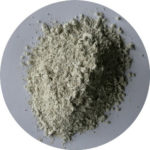
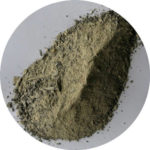
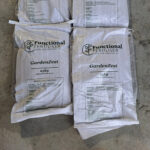
Functional Fertiliser provides CalciZest, a product containing high quality lime mixed with soft
carbons inoculated with a wide range of soil friendly fungi and bacteria which ensures even
more rapid plant uptake.
Clover is more digestible than grasses between now and autumn which means animals can eat
more kilograms of dry matter in their naturally allotted grazing time.
The upside is higher milk production and an increase in weight for fully fed animals. As clover
nearly always contains more soluble sugars as measured by brix, grazing is even with uniform
regrowth.
There’s a school of thought that calcium is also important for body temperature regulation
resulting in animals requiring less shade during the hottest time of the day.
The dung of animals grazing clover rich pasture is pastier and breaks down rapidly providing
essential nutrient for rapidly growing plants.
Clover being a legume fixes nitrogen from the atmosphere. and the air we breathe contains 78%.
There is no shortage; it’s the ability to make it available for plant growth that is unique to
legumes, a process yet to be replicated.
Prior to the use of synthetic nitrogen there is data from MAF research units showing pastures
growing sustainably more than 18 tonne of drymatter annually, and yet production from top
quality permanent pastures seldom exceeds 13 tonne today.
Work undertaken at Ruakura Research Station showed a marked decline in the amount of
nitrogen fixed by clover when synthetic N was applied.
Fixing nitrogen naturally is highly efficient and research in the Bay of Plenty shows minimal
leaching losses of nitrogen to ground water where nitrogen is provided solely by clover over the
growing season.
To provide further support and historical context for the pursuit of legume abundance, the term
“in clover” is synonymous with comfortable, moneyed, and prosperous.
A further and oft debated key to summer growth is grazing intervals. After many years of
practical experience, we advocate a genuine 30-day grazing interval over summer.
This means a single grazing each month prior to the arrival of autumn rain, typically arriving in
the first week in March.
For more information call Peter on 027 495 0041.