Most farmers I work with remain cautious about their fertiliser spend this season. Budgeting for
the current season involves educated guess work and further out the more difficult that
becomes.
It’s a real challenge for an industry where decisions made now have impacts years in advance,
and it’s not possible to stop production while we wait for better conditions or more certainty.
Geopolitical shifts mean market returns can be volatile and climatic variability adds a further
element of uncertainty.
Ensuring the important things remain in place is essential with soil fertility high on the priority
list.
Phosphorus and nitrogen are the two nutrients most money is spent on. Low cadmium rock
suitable for superphosphate manufacture is increasingly difficult to source and that is reflected
in its steady lift in price over time.
With less natural gas available the price of urea is also affected and lowering inputs negatively
impacts pasture growth unless there is an alternative.
The only alternative is nitrogen from another source and nitrogen fixed by clover is the solution
available to all pastoral farmers.
An article published in 2003 titled White clover in top 20 essential survival items opens with
the sentence, “If there is one thing New Zealand couldn’t do without, it would have to be white
clover.”
“…white clover-based pastures underpins most of New Zealand’s milk, meat and wool
production in a quiet and unassuming way.”
It was estimated then (2003) that white clover contributed $3 billion annually to the New
Zealand economy. In today’s currency that is likely to be in excess of $10billion.
At that time AgResearch led the world in understanding the genetic composition of this “white
gold” and $20m annually of clover seed was exported.
In short, there remains the knowledge and ability to maximise the advantages of increasing the
amount of clover in our grazed pastures.
Clover in a well managed sward can supply enough nitrogen to sustain yields of 18 tonne of dry
matter per year. Currently intensive dairy pastures seldom exceed 15 tonne DM/ha.
Animal performance significantly lifts when there is a 20% clover content in the sward due to
the increased digestibility of clover relative to grasses.
This is particularly the situation from early November onwards when grasses, regardless of
management, develop a seed head.
Clover contains usually twice the calcium of grasses, the reason that lambs fatten most quickly
on clover dominant pastures.
When combined with the extra energy in the form of soluble sugars accompanied by true, not
crude, protein performance gains are further enhanced.
Lactating animals grazing clover dense pasture lose less weight in early lactation and gain
condition more rapidly throughout the remainder of the season.
The objection to managing pastures to maximise clover performance is typically that clover
plants are subject to damage by pests, usually flea and weevil.
Although pests are always present genuinely healthy plants are minimally a ected. The way to
ensure that pest pressure is minimised is to lift soil calcium levels and soil pH above that
required for grasses.
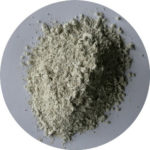
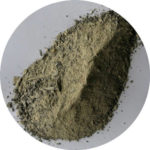
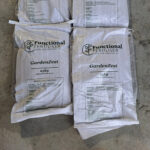
Functional Fertiliser developed CalciZest over twenty years ago to promote clover growth in
pasture. It contains calcium in the form of lime to lift immediate plant availability.
Soft carbons inoculated with a selected range of beneficial fungi and bacteria ensure that the
uptake of nutrient is rapid, and when applied prior to December a significant increase in clover
performance can be expected throughout the remainder of the season.
For more information call Peter on 027 495 0041 or 0800 843 809.