The fact that permanent grazed pastures grew significantly more total feed over a twelve-month period prior to the widespread use of nitrogen is, for most, an uncomfortable one.
It is largely dismissed by farmers and advisors, however it remains a fact and those that are prepared to at least consider it a possibility place themselves in a position to outperform their peers and prosper financially as a result.
Farming is a competitive industry with those in the top 5% enjoying financial benefits not available to the those battling to break even, and that’s not a new situation.
We protect ourselves from self-examination by believing that anything new is better than what has gone previously however lurking in the depths of our consciousness is a little doubt, and that’s essential.
Economies have strengthened and societies prospered over the last 50 years as new technologies have been adopted, but growth is seldom linear.
There are always bumps, bruises, and stubbed toes along the way with those learning from the pain now well placed to enjoy a prosperous future.
Even a modest increase in annual pasture production, from say 11 tonne DM/ha to 12 tonne is worthwhile when achieved at no extra cost.
With an increase in volume comes an increase in quality with higher energy levels, less nitrate, better mineral uptake resulting in improved animal performance.
Reducing costs provides a double whammy. Less time spent with poor performing animals provides time for extra observation, a critical component of superior performance.
Scheduling time to monitor pasture growth is always valuable, it’s not just data collection that’s important, it’s how it is interpreted that is key.
There is little that can be done to lift pasture performance between now and the critical second half of September. That’s already been determined by pasture management, and soil fertility inputs in autumn.
However, a lift in pasture grown from November onwards can be promoted by tailoring a spring nutrient application that favours clover growth.
The priority is providing extra plant available calcium as clovers contain 3 – 4 times more calcium than grasses.
Synthetic nitrogen strips calcium from the soil so withholding nitrogen is essential. It’s also important because clovers fix nitrogen in response to steadily declining plant available levels.
Soil temperatures above 20℃ retard grass growth however those same conditions stimulate clover.
They harvest more sunlight, creating energy rich feed ensuring higher levels of production and more rapid weight gain.
A clover dense mat reduces the loss of moisture during prolonged periods of hot weather and should conditions be kind, high quality nutritionally dense hay can be harvested.
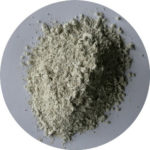
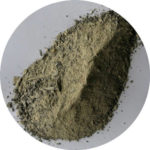
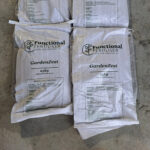
CalciZest from Functional Fertiliser was formulated to stimulate clover growth. It’s a solid product containing soft carbons, calcium, and a wide range of selected microbes.
It’s typically applied at 400kg/ha through conventional ground spread equipment and helps ensure, along with sound grazing management, a lift in both summer and early autumn pasture growth.
Essential phosphorus, potassium, sulphur, and trace elements may be added as required.
For more information call Peter on 0800 843 809 or 0274950041